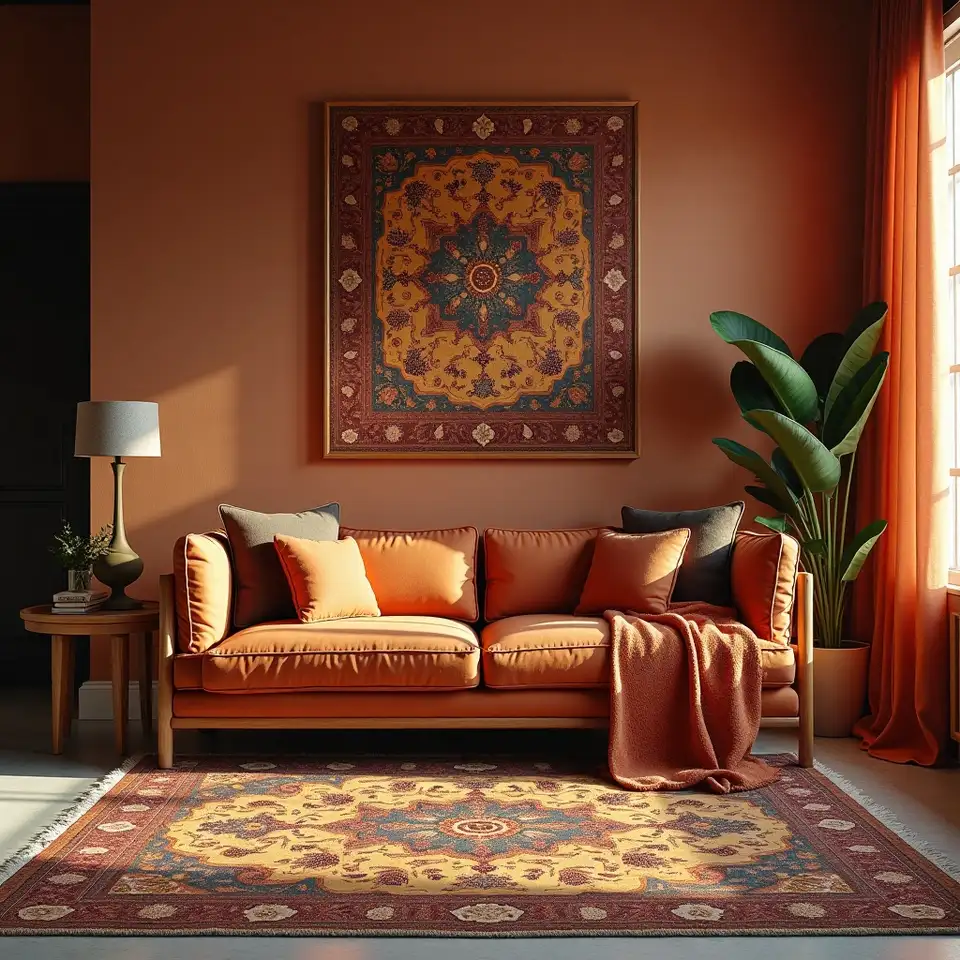
The oldest rugs in a collection are rarely the least interesting — they are often the most precisely documented.

How We Approach the Study of Antique Textile Valuation and Historical Provenance
A methodical, evidence-driven process for understanding what makes a hand-woven carpet historically significant and worth careful long-term consideration
Most people assume that age alone determines a carpet's significance, but that assumption tends to unravel quickly under scrutiny.
We follow what we call a three-stage review process: first, a structural assessment of the weave and fibre composition; second, a chromatic analysis of the dye palette against documented regional patterns; and third, a contextual review of any auction records, estate documentation, or scholarly citations associated with the piece. Only after all three stages do we form a considered view on historical significance.
The Team Behind the Research: Roles, Backgrounds, and the Values That Shape Our Work
The people who contribute to this work come from art history, materials science, and analytical research — not from sales floors.
Our lead consultant spent years examining archival collections across North America and Central Asia, developing a particular focus on Caucasian and Anatolian flatweaves from the nineteenth century. That depth of direct exposure to primary material shapes the way every analytical review is framed — grounded in what the object itself reveals, rather than what the market narrative suggests.
Our operations director oversees the documentation process, ensuring that every assessment we publish is traceable, timestamped, and cross-referenced against independent scholarly sources. In a field where attribution disputes are common, that administrative rigour is not a formality — it is a core part of the analytical product.
A rotating group of contributing researchers, each with specialisations in specific weaving regions or historical periods, brings additional depth to complex cases. Their involvement means you are reading the considered view of multiple trained perspectives, not a single voice working without peer review.
Our Research Philosophy and Founding Purpose

There is a quiet assumption embedded in most alternative asset commentary: that the most important question about any object is what it will be worth tomorrow. We built this resource to challenge that assumption directly. The carpets and textiles we study carry within them a record of trade routes, dyeing traditions, nomadic migration patterns, and the hands of weavers whose names history did not preserve. Understanding that record — its depth, its integrity, its gaps — is the foundation from which any serious long-term consideration of a piece must begin. We do not present this as a substitute for independent financial or legal advice, which every prospective collector in Canada should seek before making any acquisition decision. What we offer instead is the kind of careful, documented analysis that helps you ask better questions of the advisors you choose to consult. Past performance in any asset category does not predict future results, and the antique textile market is no exception to that principle.
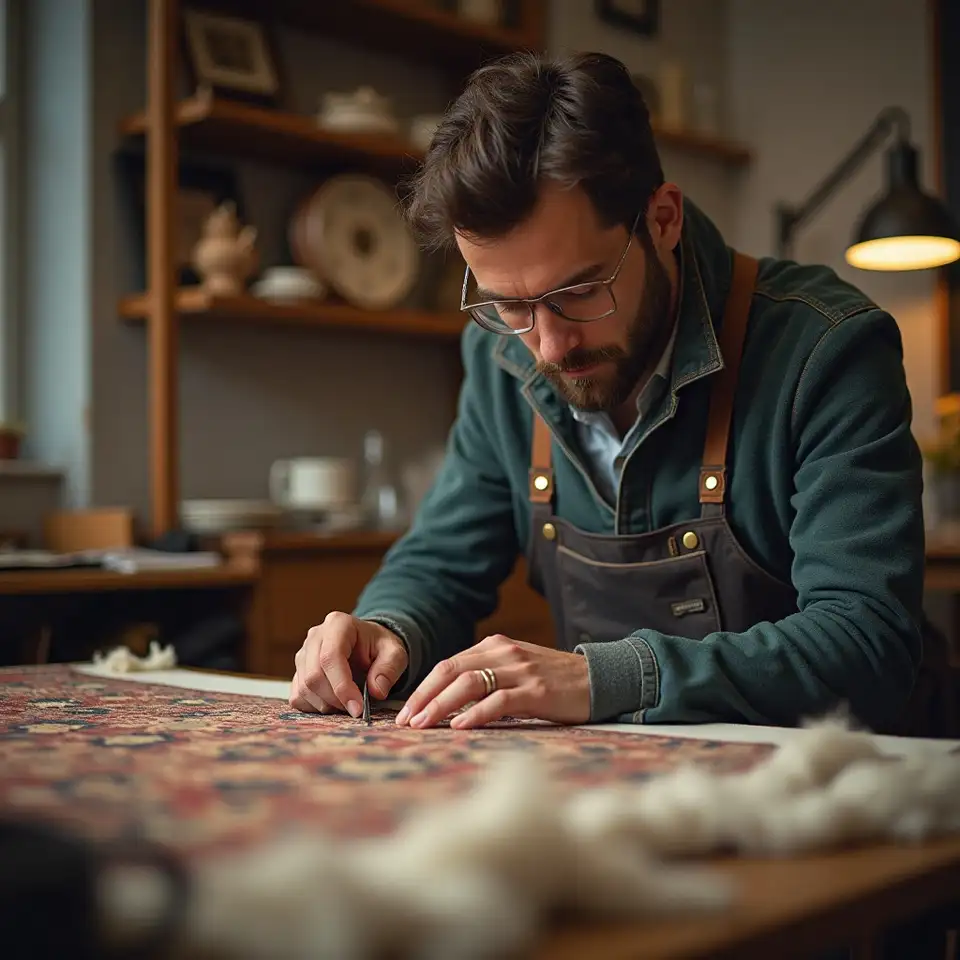
Explore Our Methods
Walk through the authentication and historical review process we apply to every piece we examine
If you are curious about how the three-stage review process works in practice — or how regional weaving traditions are mapped against dye analysis results — the information section of this site walks through each step in plain language. You do not need a background in textile history to follow the reasoning; you need only a willingness to look carefully at evidence and let it lead where it goes. That is, after all, how every serious study of material culture begins.
Learn moreWhat Draws Thoughtful Collectors and Researchers to Antique Hand-Woven Textiles as a Subject of Long-Term Study
Hand-woven carpets from the eighteenth and nineteenth centuries occupy an unusual position: they are simultaneously objects of daily use, expressions of regional artistic tradition, and physical records of trade and migration. That layered identity makes them more complex to evaluate than almost any other category of portable antique — and, for precisely that reason, more interesting to study carefully.
The analytical challenge begins with authenticity. A well-executed reproduction can deceive an untrained eye, and the market has a long history of pieces whose attributions shifted substantially as scholarship advanced. Understanding how authentication has evolved — and where its current limits lie — is essential context for anyone approaching this field seriously.
Five Principles That Guide Every Review We Publish
These principles are not aspirational statements — they are operational constraints that shape how every piece of analysis on this site is produced, structured, and presented to you.
-
Evidence before narrative
Every claim made about a carpet's origin, age, or weaving tradition is traced back to a physical or documentary source. Where the evidence is ambiguous, the ambiguity is stated plainly rather than resolved by inference or market convention.
-
Regional specificity matters
Broad regional labels — 'Persian', 'Oriental', 'Caucasian' — are starting points, not conclusions. Our reviews seek the most precise attribution the available evidence supports, because specificity is where historical understanding actually lives.
-
Condition is reported, not softened
Wear, repair, restoration, and loss are described as precisely as the assessment allows. A carpet with significant restoration can still be historically significant, but you deserve to know the difference between original structure and later intervention.
-
Limitations are disclosed
No authentication process is infallible, and no market analysis predicts the future. Every review on this site includes a clear statement of what the analysis cannot determine, so you can calibrate your own reading of the conclusions accordingly.
-
Independence is preserved
We do not accept commissions on sales, represent dealers, or take positions in pieces we review. That separation between analysis and transaction is, in our view, the minimum condition for producing research you can trust as a starting point.
What We Stand For
Methodical rigour
Every review follows the same three-stage process regardless of the piece's apparent prestige or market value. Consistency in method is the only way to produce analysis that holds up over time, and we apply it without exception to every textile we examine.
Transparent uncertainty
We report what the evidence supports and nothing beyond it. When the provenance record is incomplete or the authentication is contested, we say so directly, because a clearly stated limitation is more useful to you than a confidently stated guess.
Historical depth
A carpet is a document as much as it is an object. We approach every piece with the same respect for its historical context that a careful archivist would bring to a manuscript — looking for what it records about the world that produced it.
Editorial independence
Our analysis is not shaped by dealer relationships, auction house affiliations, or commercial incentives of any kind. The only obligation we acknowledge is to the accuracy and usefulness of the work itself.